
 TuckBook
Bedtime stories
TuckBook
Bedtime stories
Mabel Maps the Riverbank
Mabel learns that a riverbank changes, but careful noticing can make a map wiser. With help from Calder and Nessa, she finds a safe new home for her treasured stone.
✦ Story pages
9 minutes of reading
Mabel Maps the Riverbank
1 / 8
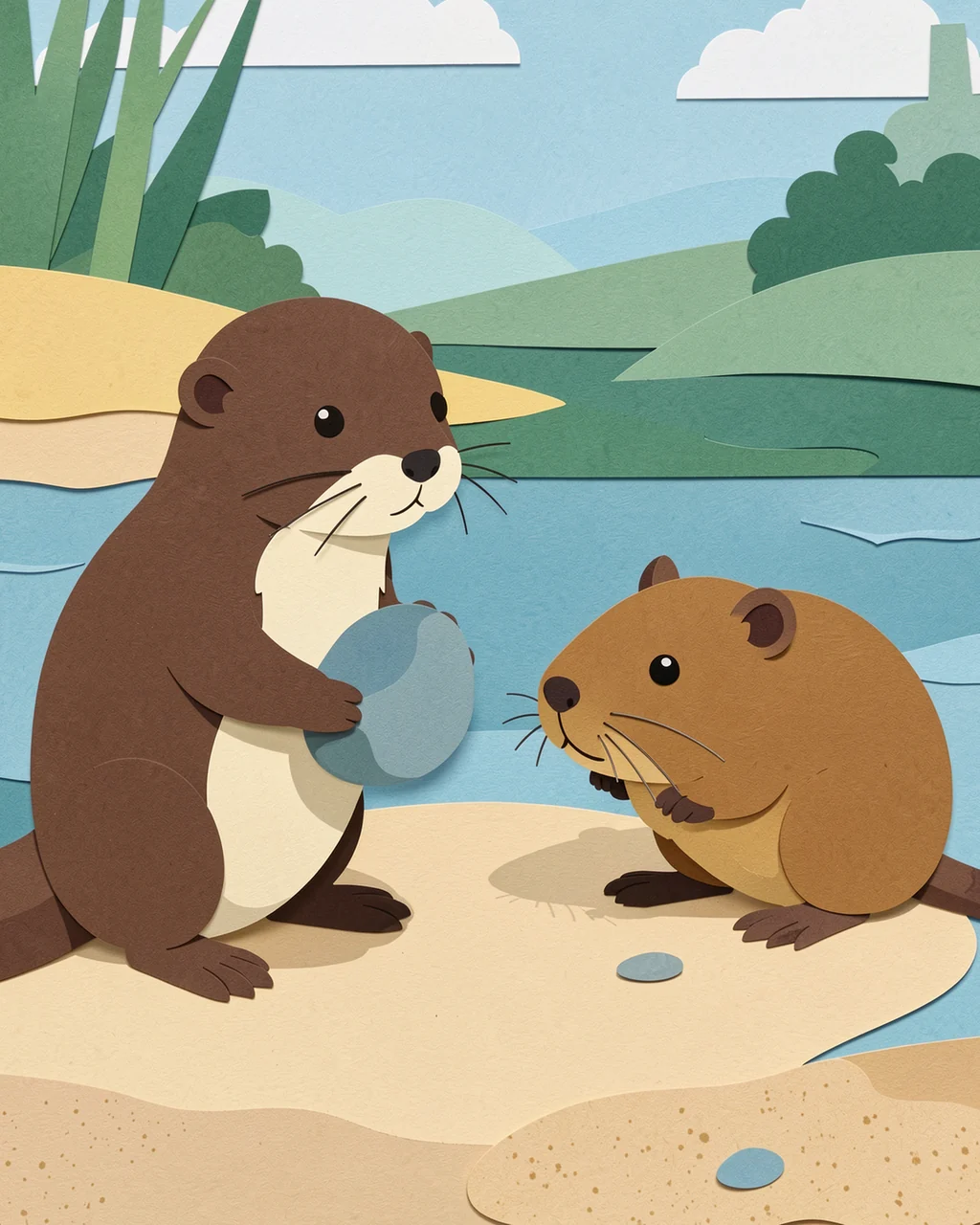
“Not again!” Mabel cried, diving her nose into the shallow water beside the bank. Her favourite stone had been resting there that morning, cool and grey-blue, with one white stripe curling around it like a sleepy worm. Mabel loved to roll it between her paws while she floated. But now the pebbles below her whiskers were round, brown, sharp, stripy, and wrong. Her stone had gone wandering with the gentle current.
Mabel the young otter searched from the muddy bend to the little shelf of roots where she kept her mussel shells. She poked beneath a curled leaf. She sniffed a hollow in the bank. She even asked a frog sitting on a half-sunk twig, “Have you seen a very excellent stone?” The frog blinked. “I have seen several excellent flies,” he said, and sprang away.
2 / 8
At last Mabel found the stone three tail-lengths downstream, tucked against a clump of grass. She hugged it to her chest. “You are a terrible stay-putter,” she told it. Then she noticed how different the bank looked. Yesterday’s little puddle had drained away. A fresh ribbon of sand lay where her paw prints had been. The river had risen a little, then slipped back, carrying some pebbles along with it. Mabel could not tell where she had started searching.
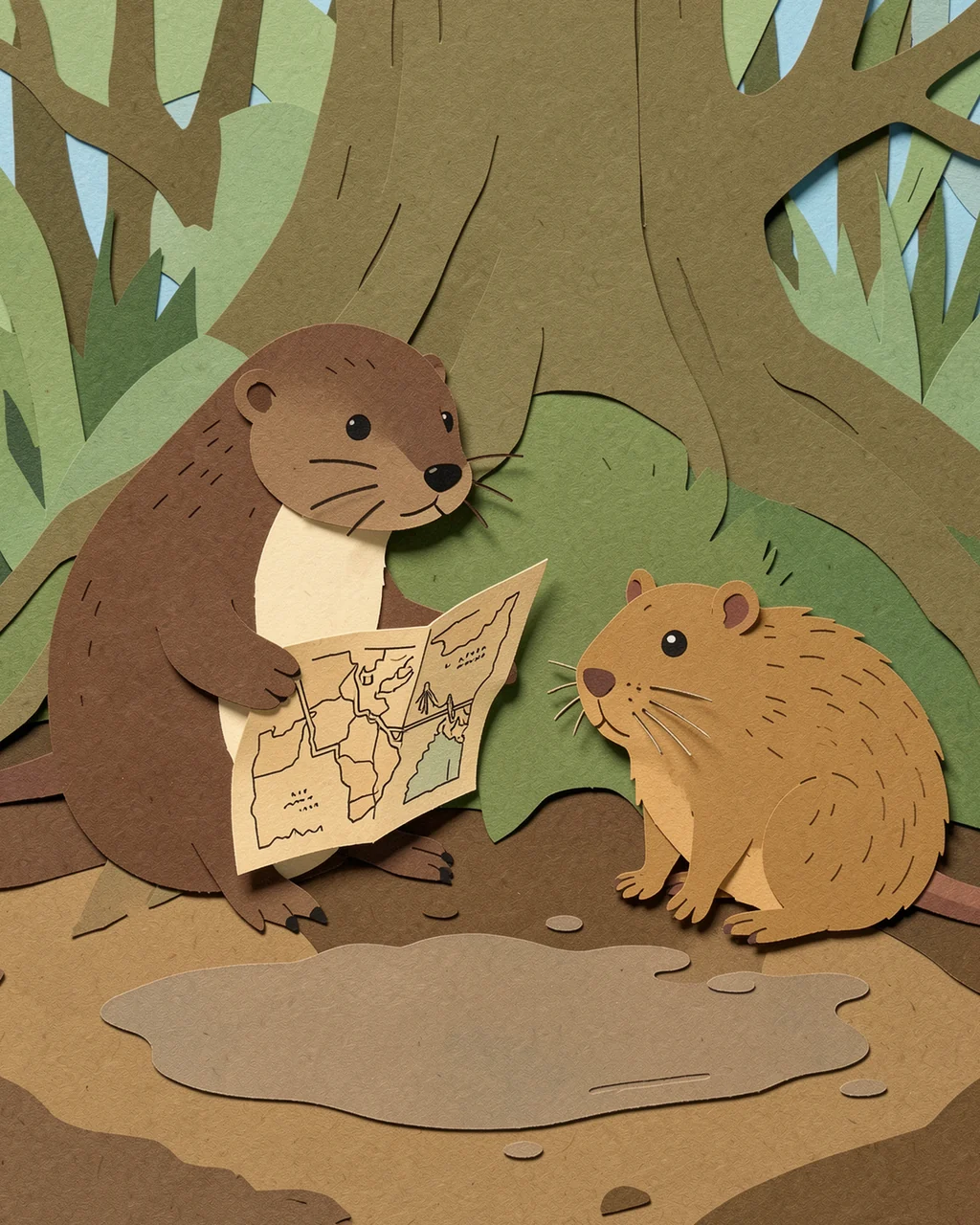
That afternoon, she found a dry piece of pale bark beneath an alder tree and a black bit of charcoal from an old, cold picnic fire ring. With her stone pressed safely under one paw, she scratched a hand-drawn riverbank map on the bark. She drew the water as a wobbly line, her shell shelf as three dots, and a huge X where she had found the stone. “There,” she said. “Now I shall always know.”
3 / 8
The next day, Mabel returned with her bark map tucked under a root. The X sat above a drawing of a puddle. But there was no puddle. There was only damp mud, a snail trail, and a beetle wearing a crumb like a hat. Mabel looked from the map to the bank until her ears flattened. “Maps are supposed to remember things,” she grumbled. “This one remembers things that have vanished.”
4 / 8
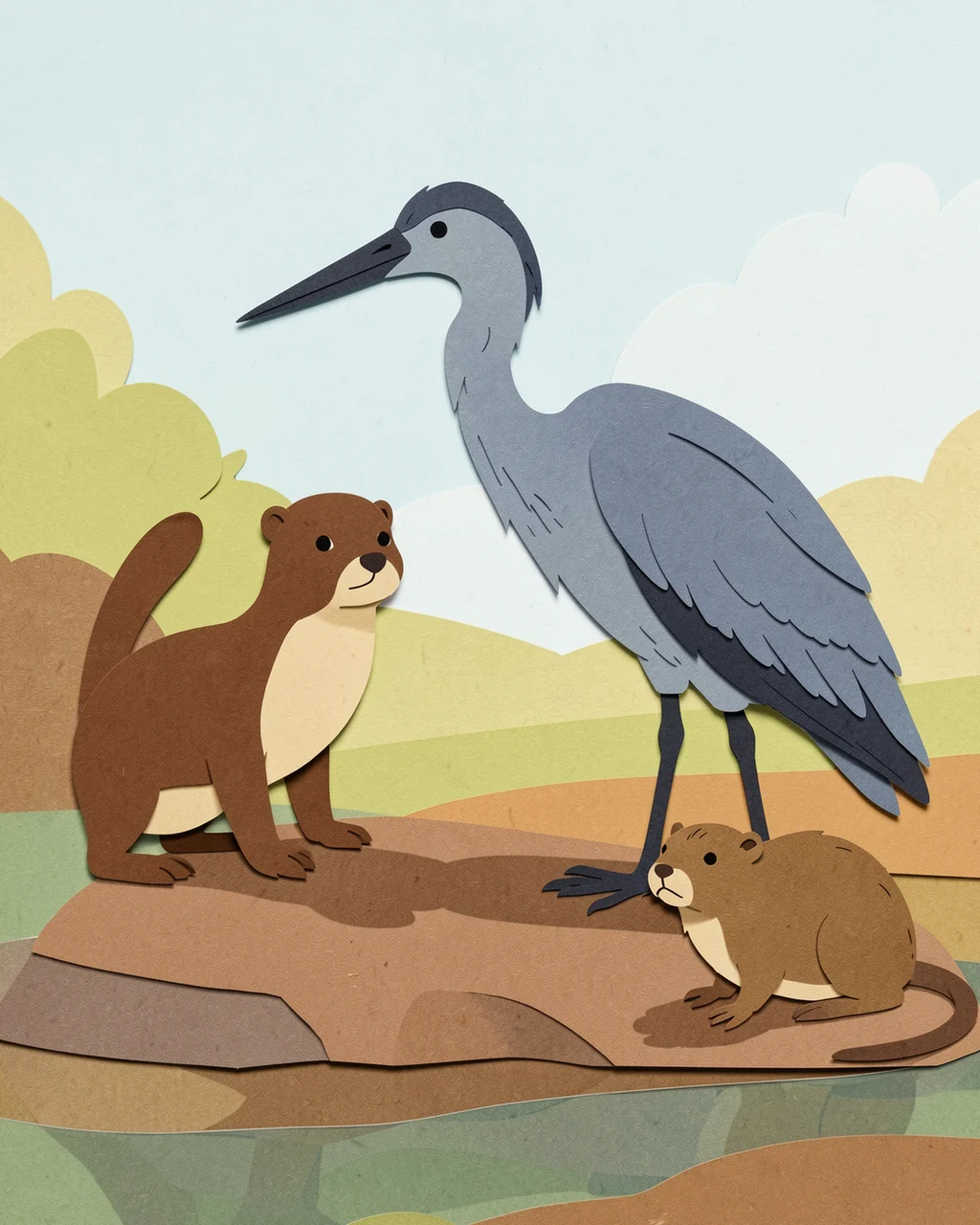
A long shadow crossed the mud. Calder the heron landed on a broad flat rock near the shallows, folding his blue-grey wings neatly behind him. “What has vanished?” he asked. Mabel showed him the map. Calder bent his long neck close. “Puddles come and go,” he said. “Sand scoots. But I have stood on this rock every day for years. It is too heavy for the river to nudge.” He tapped the flat heron’s rock with one careful foot.
5 / 8
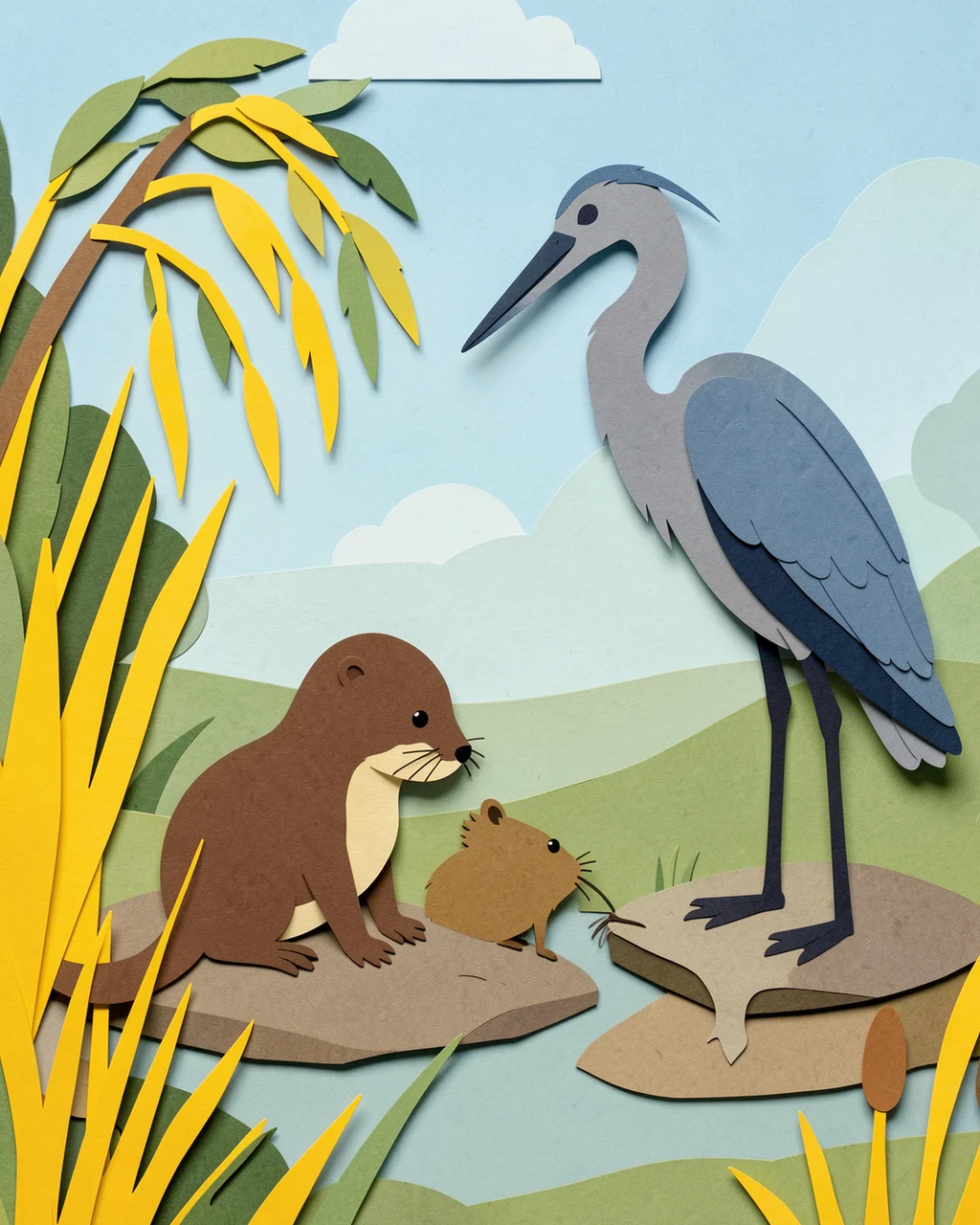
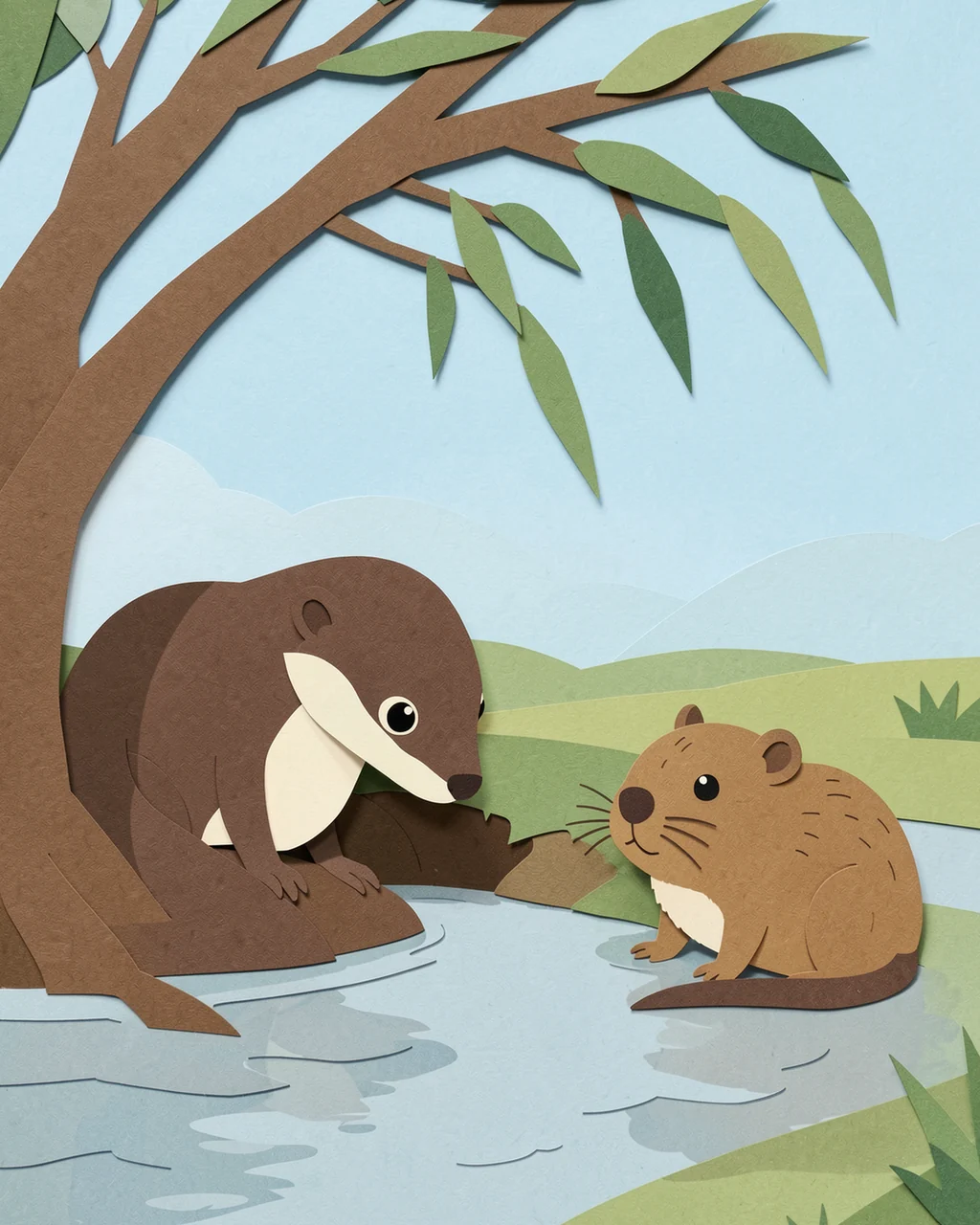
Mabel stared at the rock, then the willow leaning over the bank. Its trunk had a bent elbow, as if forever about to whisper a secret into the water. Beneath it grew yellow reeds, scratchy-tipped and taller than Mabel’s head. They had been there yesterday. “Not things the river can rearrange,” Mabel said. “Things that stay themselves!” She picked up a fallen willow leaf and used its pointed stem to scratch a bent tree, a patch of reeds, and Calder’s rock onto her map.
6 / 8
For three days Mabel practised. Each morning she checked waterline and added a wobbly edge to map. When reeds leaned after drizzle, she drew them. When a pile of twigs caught near the willow, she drew that too, then crossed it out when the twigs floated away. She kept her smooth stone in a snug hollow below the willow while she worked, but on the fourth morning the hollow was empty. A small rise in the calm river had slipped through it and rolled the stone somewhere along the shallows.
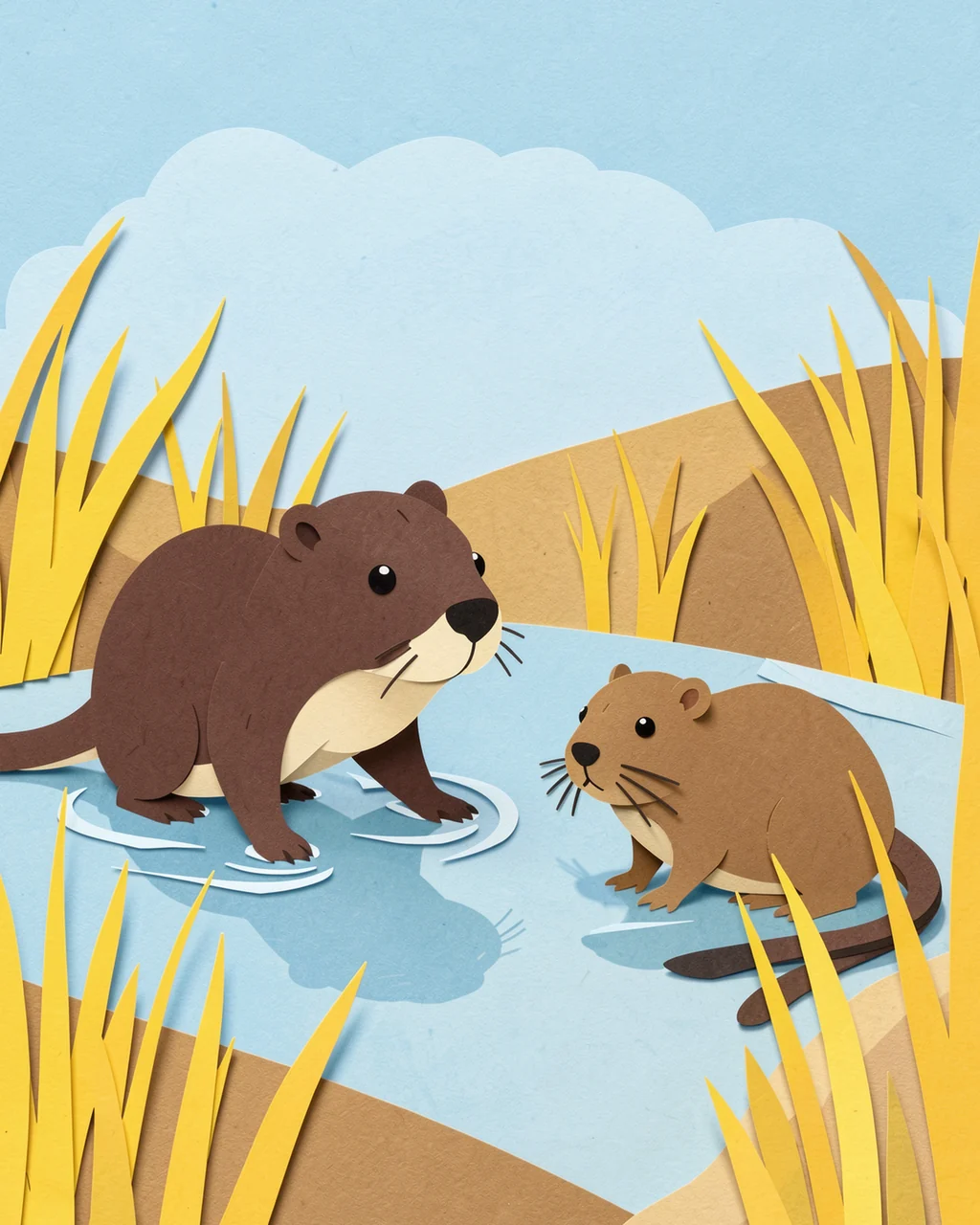
Mabel’s paws wanted to rush everywhere at once. Instead, she took a breath and called, “Calder! Nessa!” Nessa, a brown water vole with bright bead eyes, popped from the reeds carrying a piece of grass. Mabel laid the bark map flat on Calder’s rock. “Will you notice with me?” she asked. “I need the things that will not wander.” Calder watched the willow’s bent trunk. Nessa traced the yellow reeds with her whiskers. Mabel pointed from the willow to the reeds, then from the reeds to the rock.
7 / 8
“The stone was in the hollow below the willow,” Mabel said. “If the water rolled it away, which way would it go?” Calder pointed his beak toward a low curve of bank beyond his rock. “Along the quiet edge, not out in the middle.” Nessa squeaked, “There is a wrinkle of water where little things collect.” Mabel checked her map. She had drawn that curve yesterday, though she had not understood why it mattered. Now she slipped into the shallow water, keeping one paw on the sandy bottom, and followed the yellow reeds until Calder’s rock was just behind her.
At the low curve, a willow leaf had snagged against two pebbles. Under it lay a bottle-green marble, a feather, three tiny shells, and Mabel’s grey-blue stone with its white curling stripe. “Found you!” she whooped. But when she scooped it up, she did not carry it back to the old hollow. That hollow had already proved it could not keep a promise. Mabel studied the bank, the map, and the little collecting curve.
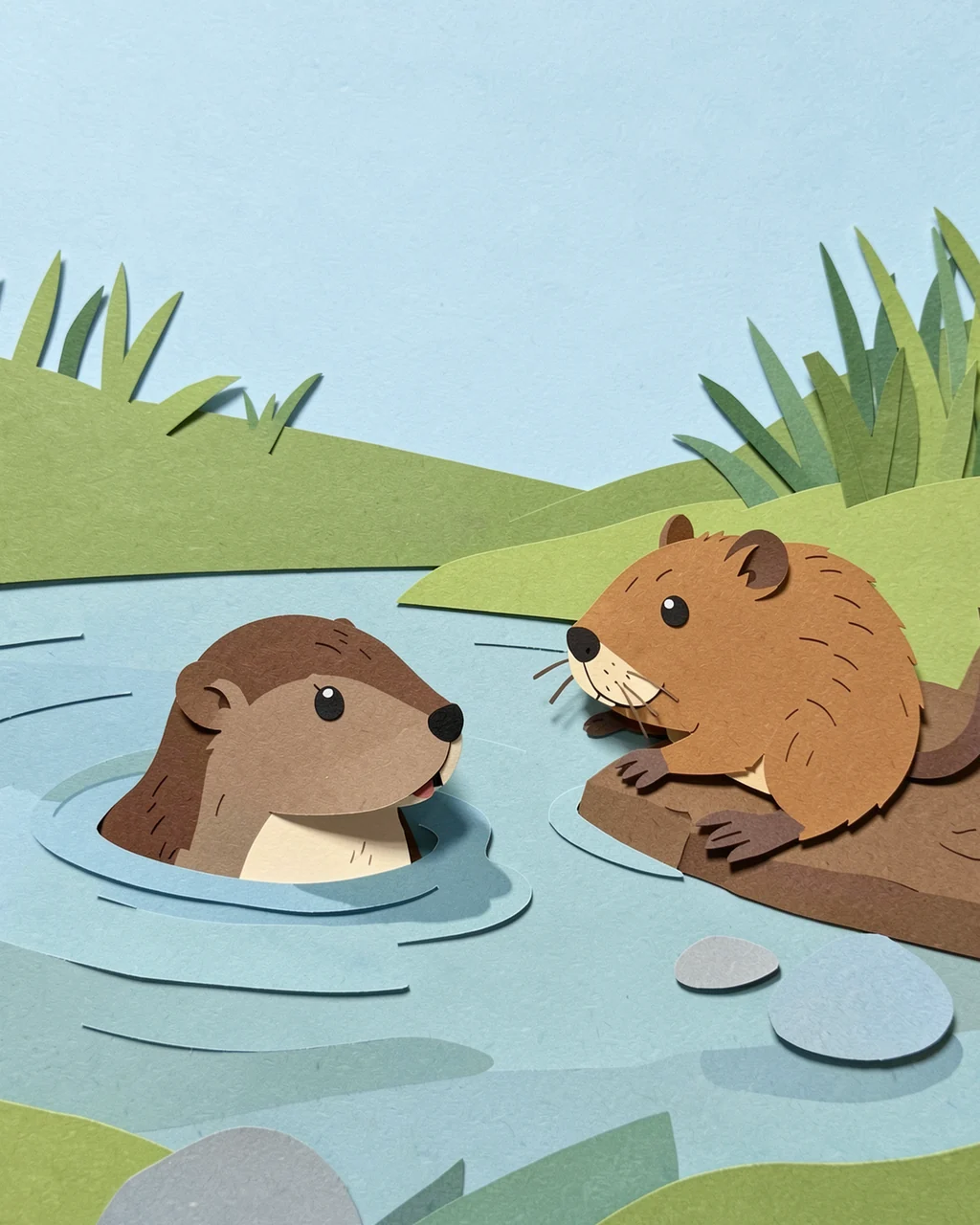
Then she chose a spot above the usual waterline, behind Calder’s flat rock and below the bent willow. With Nessa pushing small dry leaves and Mabel carrying smooth pebbles one by one, they made a shallow resting nest in firm earth. Mabel placed her favourite stone in the middle and set two larger pebbles against it so it could not roll. Overhead, the yellow reeds rustled their thin heads. “Will it stay?” Nessa asked. Mabel checked the rock, the willow, and the reeds against her map. “I will know exactly where to look,” she said.
8 / 8
Calder gave a solemn heron nod. “A good map does not tell the river what to do,” he said. “It tells a careful otter what she has noticed.” Mabel added one last mark to the bark: a small circle between the bent willow and the heron’s rock. Then she floated in the shallows with her stone resting safely on the bank nearby. Whenever she wanted it, she could see the willow’s crooked elbow, the yellow reeds, and Calder’s broad rock. The river might make new patterns tomorrow. Mabel had learned how to draw them.
After the story Questions to talk through together After reading, ask which moment felt the warmest or bravest today.
Emotional goal
An otter kept losing her favourite stone in the river and made a map of the bank so she could always find it again.
A question to discuss
After reading, ask which moment felt the warmest or bravest today.
Questions after reading
- Which choice changed the story the most?