 TuckBook
Сказки на ночь
TuckBook
Сказки на ночь
Three Tests for Red Buttons
A warm illustrated story about a small discovery, a meaningful choice, and finding a gentle way forward.
✦ Страницы сказки
7 минут чтения
Three Tests for Red Buttons
1 / 5
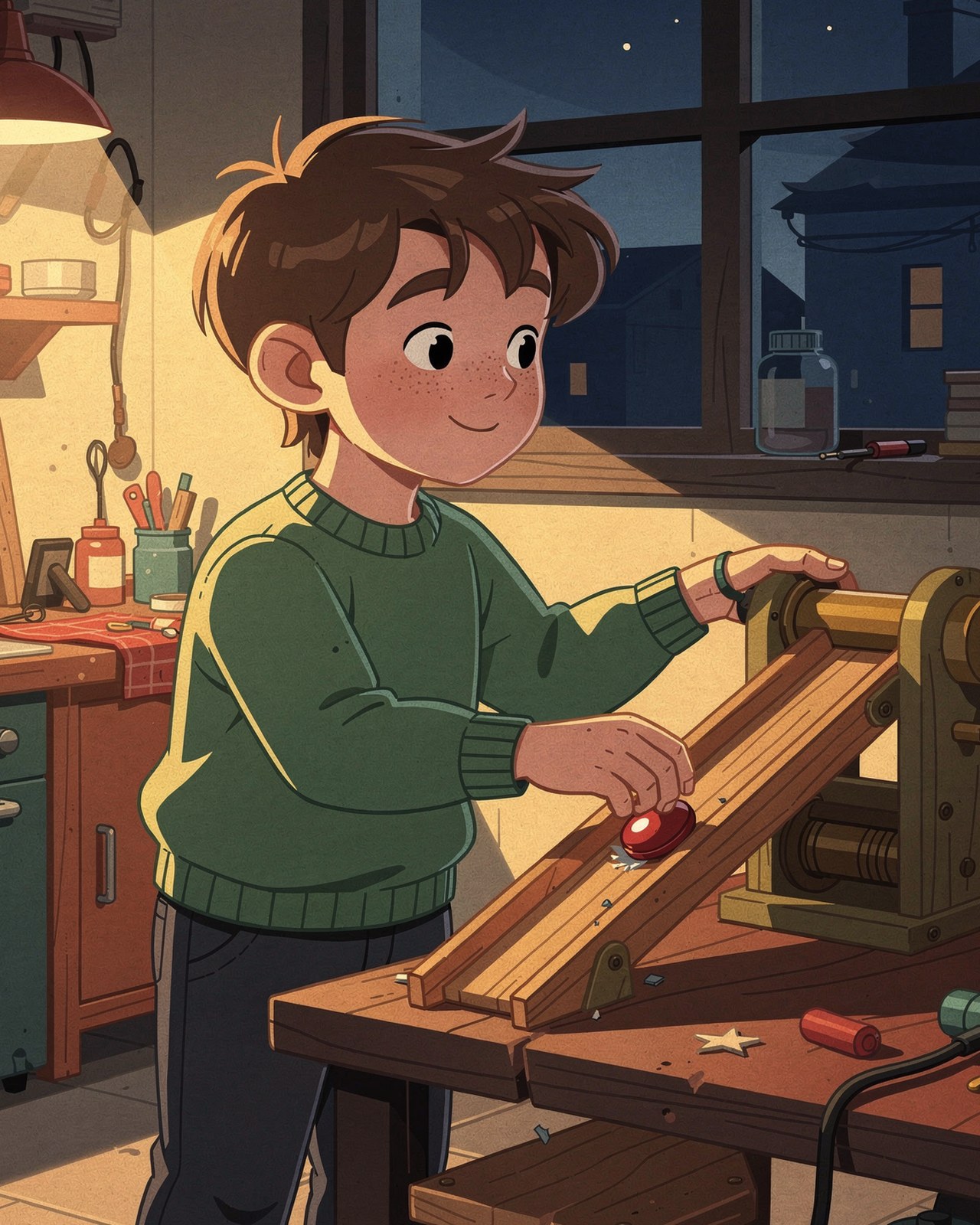
“Blue to blue, green to green, yellow to yellow,” said Milo, turning the brass handle of his button-sorting machine. At eight years old, he had spent three Saturdays building it in the cozy workshop beside the kitchen. Tonight he wanted it to sort every button in his grandmother’s old tin before bedtime. Three glass sorting jars already shone with tidy piles. Then a red button rolled down the little wooden ramp. The machine opened its silver mouth. Chomp. The button vanished.
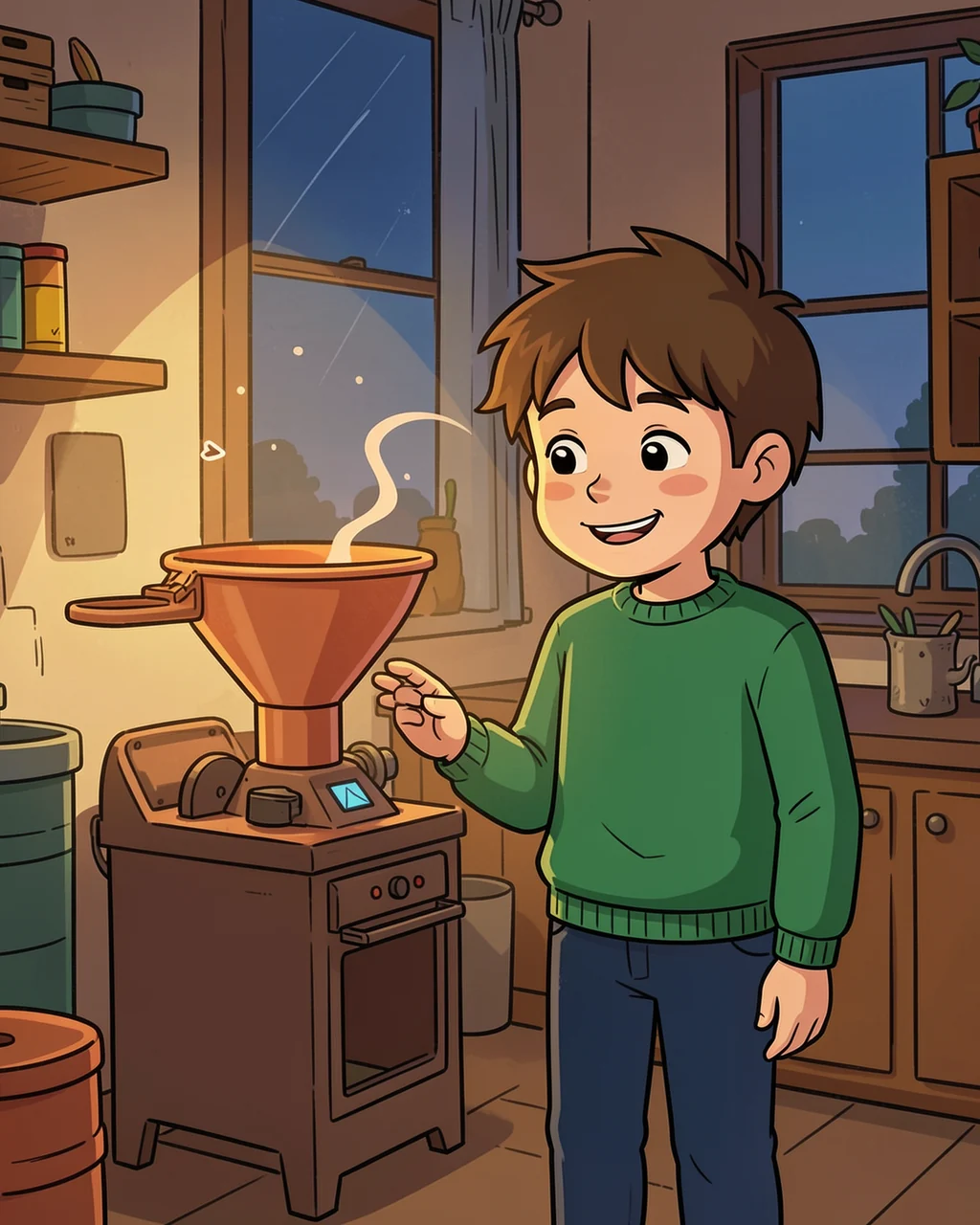
Milo blinked. His machine gave a cheerful ding and wiggled its copper funnel. On its front, a painted arrow pointed toward a tiny sign that read: THANK YOU, GARDENER! Milo had painted that sign himself, mostly because it made him laugh.
He dropped in another red button, round as a ladybird’s spot. Chomp. Gone. A third followed, then a fourth. Each time, the machine dinged more proudly. The red-button tray beside it stayed empty, while the blue, green, yellow, and white buttons clicked neatly into their jars.
Milo’s ears felt hot. He had promised Grandmother that her scarlet coat buttons would be safe. He crouched beside the machine and listened. Somewhere deep inside, buttons rattled like pebbles in a jar. “You are not supposed to eat them,” he told it. The machine’s funnel gave an innocent little wobble.
He nearly tipped the whole machine upside down. But the brass handle, the glass tubes, and the color sensor had taken him ages to fit together. If he shook everything loose, he might never learn what had gone wrong. Milo put both hands flat on the workbench until his impatient fizz settled into a smaller buzz. “Three tests,” he decided. “Then I may complain properly.”
2 / 5
For his first test, Milo fed the machine a red wool pom-pom from his craft drawer. Chomp. The funnel swallowed it and rang twice. Milo bent close to the little square color sensor, which sat behind a polished glass window. It was supposed to tell the machine what color had arrived. Yet its tiny needle had swung all the way to a painted picture of a strawberry bush.
For his second test, Milo held a red button over the sensor but did not let it slide into the funnel. The needle quivered at the strawberry bush again. Below it were two other pictures he had made when inventing: a blue raindrop and a yellow sun. He remembered drawing the strawberry bush during a make-believe game called Garden Helper, when he had wanted the machine to find berries for invisible jam.
“Oh,” said Milo. The machine had not decided buttons were delicious. It thought it was gathering glowing berries. He looked through the round inspection window in the side. There, under a small brass flap, the red buttons gleamed together with the wool pom-pom. The machine had kept them carefully. It had not chewed even one.
For his third test, Milo turned the sensor’s knurled little dial away from the strawberry bush and onto a plain red circle marked BUTTONS. Then he placed a single red button on the new red-button tray. He had made the tray from a shallow wooden lid, but had never used it because he thought the machine would understand without help. “This is where red buttons wait,” he said, sliding it beneath the correct chute.
3 / 5
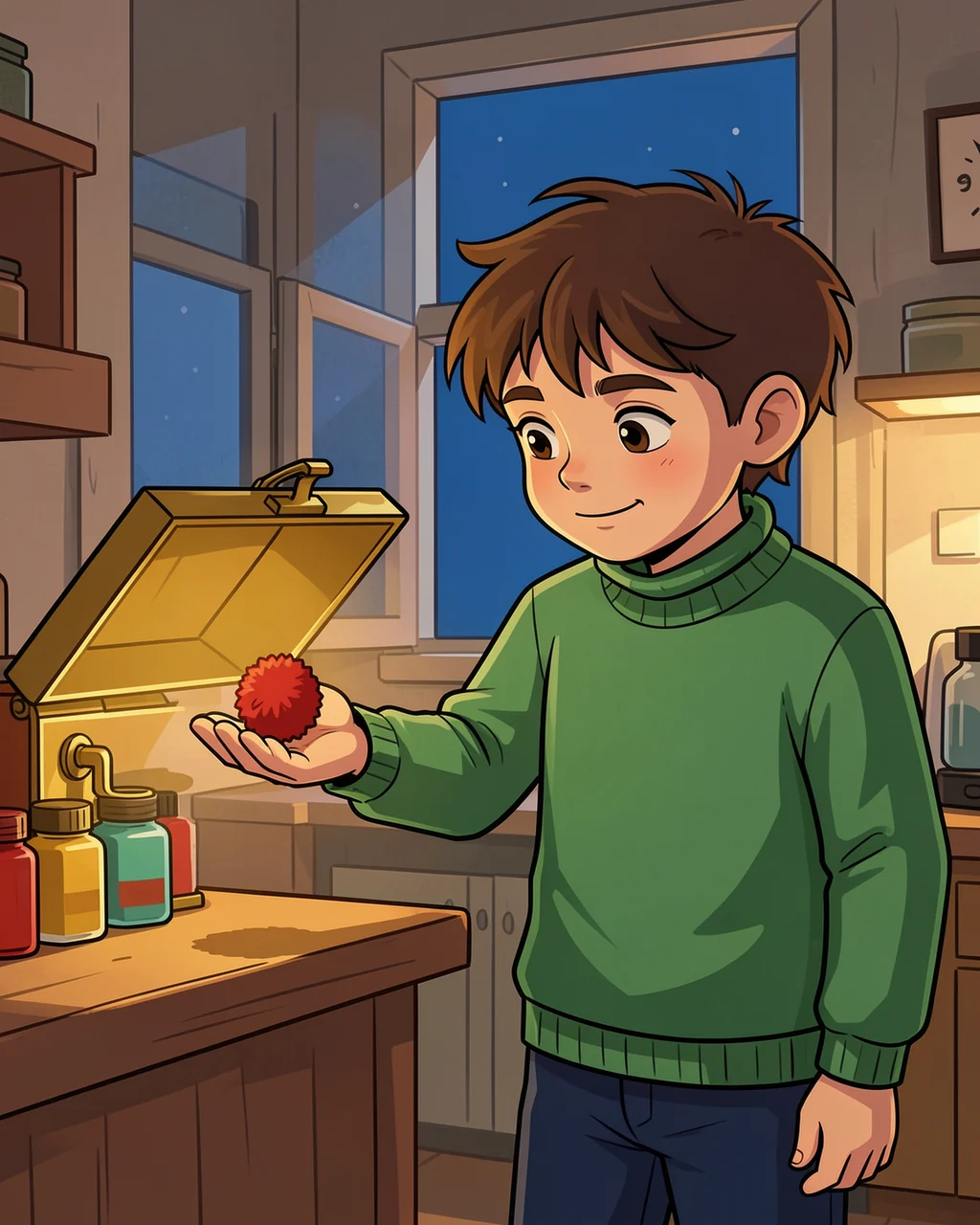
Milo turned the handle once. Nothing happened. He turned it again, slowly. Inside, a gear ticked. The brass flap lifted, and the wool pom-pom popped into his palm. After it came one red button, then another, clicking down the chute and landing in the tray instead of the hidden berry bin. Milo laughed so suddenly that his mother called from the kitchen, “Did your invention make a joke?” “It made a mistake,” Milo called back, “but I found the reason!”
4 / 5
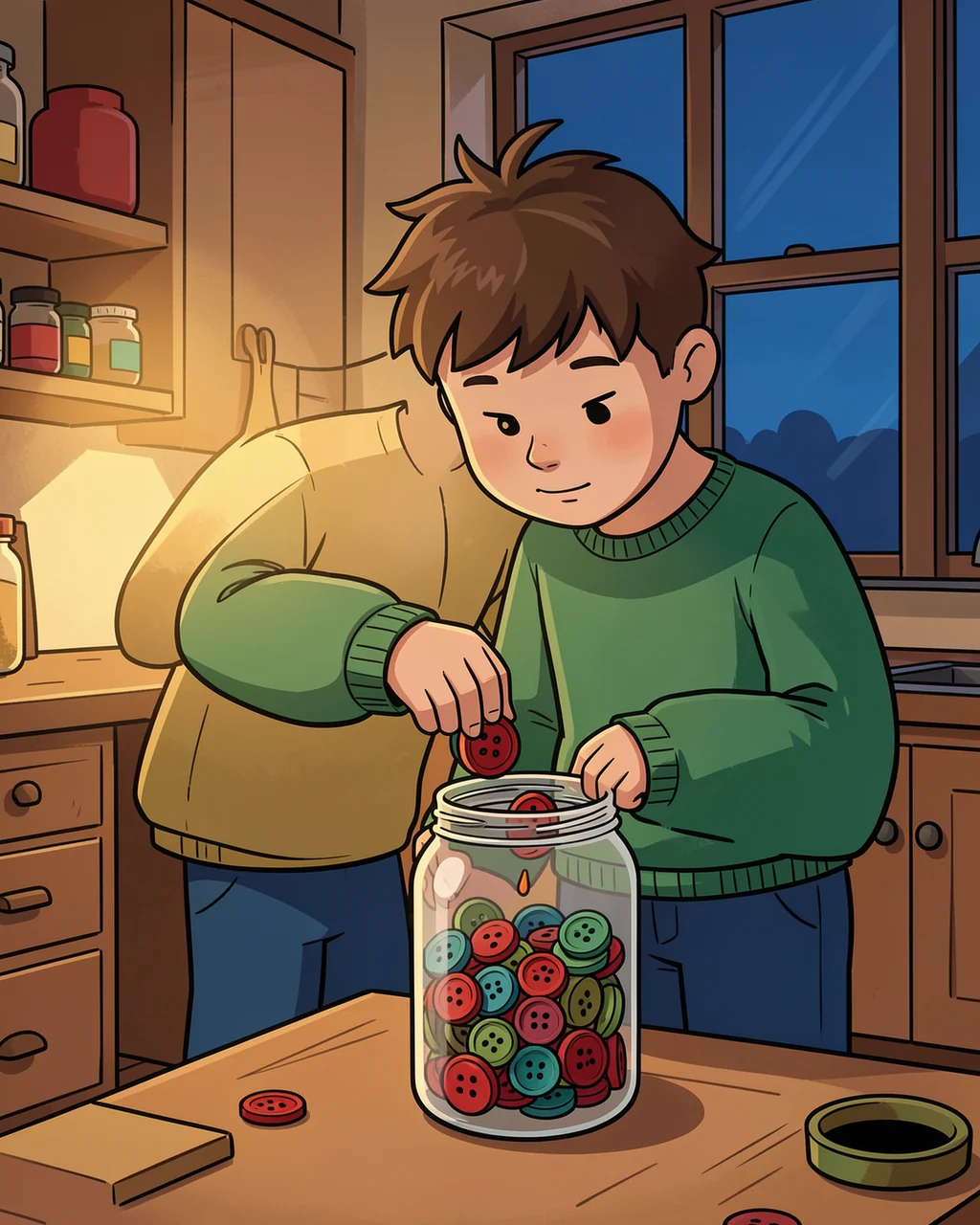
He emptied the remaining scarlet buttons into the machine one at a time, watching each one pass the color sensor. This time the funnel did not open wide like a hungry mouth. It merely guided the buttons along the red path. Soon the red-button tray was full. Milo tipped its bright collection into the last glass sorting jar, where the buttons made a soft, satisfying rain.
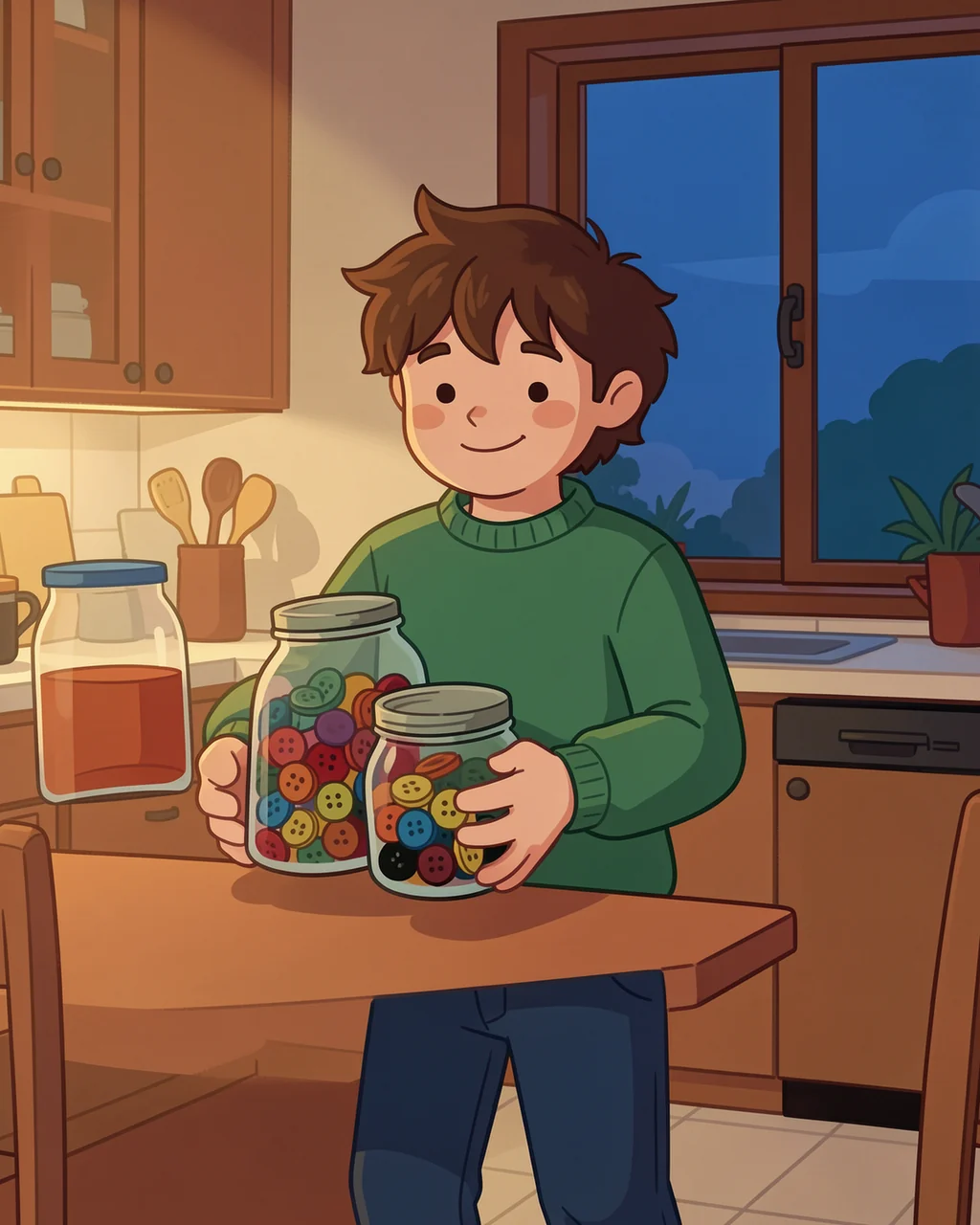
Before bedtime, Grandmother’s old tin stood empty on the workbench, and five colorful jars stood in a row beside it. Milo added a new label under the sensor: CHECK THE MODE FIRST. Then he polished the inspection window with his sleeve and gave the machine’s copper funnel a gentle pat. It answered with one small, sensible ding.
5 / 5
Milo carried the jars to the kitchen table so his mother could see them. The red buttons glowed in their glass home, not like berries at all, but like brave little clues. Behind him, in the workshop, the button-sorting machine waited quietly for its next job.
После сказки Вопросы для разговора с ребёнком After reading, ask which moment felt the warmest or bravest today.
Эмоциональная задача
To end the day gently, ease tension, and strengthen a sense of safety.
Вопрос для обсуждения
After reading, ask which moment felt the warmest or bravest today.
Вопросы после чтения
- How did the hero know it was time to make a kind or brave choice?
- Which clue or consequence mattered most?
- Which idea from the story would you try yourself?